Serial Cloner: a practical DNA cloning and mapping tool for learners
Serial Cloner, from Serial Basics, is a DNA cloning and sequence analysis program for molecular biology education and lab planning. It offers a graphical environment to annotate sequences, design constructs, and preview cloning workflows across a single window. Key capabilities include restriction mapping, sequence alignment, and virtual cloning utilities. The program targets life-science students and laboratory technicians who need accessible molecular-design workflows without commercial software constraints.
Top Recommended Alternative

What role does the app play in hands-on learning and lab preparation?
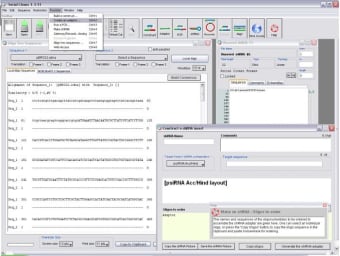
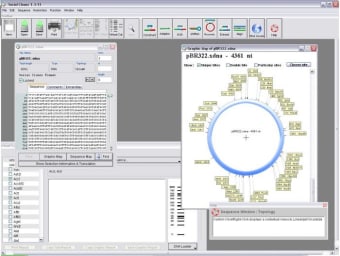
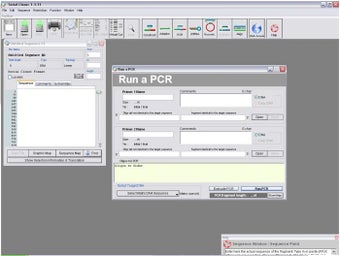
Serial Cloner uses an all-in-one-window concept to make design tasks visible, which supports project-based exercises where learners plan plasmid constructs before bench work. The program displays interactive circular and linear maps so students can visualise feature placement, annotate promoters or tags, and export maps for lab reports. Those visual outputs make abstract sequence coordinates concrete for classroom demonstrations.
How does it enable practical cloning skill development?
The program includes dedicated virtual operations that model lab techniques, letting learners simulate PCR, ligation steps, and Gateway cloning workflows. It detects open reading frames and translates nucleotide sequences into peptides, so students can connect sequence changes to protein outcomes. Specialized tools for shRNA construction and ClustalW alignment allow practice in gene-silencing design and comparative sequence analysis within the same workspace.
Is the tool suitable for students, instructors, and bench technicians?
Serial Cloner targets a broad range of users from life-science students to laboratory technicians by combining design and analysis in one package. The developer distributes versions for multiple desktop platforms, and the program's feature set supports both teaching labs and small research projects. Instructors can use exported maps and alignments to illustrate experimental rationale during lessons.
How well does it handle content, formats, and interoperability?
The program accepts and exports common molecular formats, enabling integration in course materials and research pipelines. Supported import/export includes FASTA and GenBank plus compatibility with formats used by other editors. It also offers direct web import from public sequence repositories, which simplifies pulling reference entries into classroom assignments or student projects.
Practical choice for learning design, with a setup curve to consider
Serial Cloner is a practical option for students and lab technicians who need an accessible environment for designing and visualising cloning projects, because it bundles analysis and simulation in one desktop program. Expect an onboarding period, since users acknowledge the software's complexity; instructors should allocate setup time when adopting it for class assignments or lab planning.